Category: Documentary Stories / Human Interest
Title: She Is Not Mine Alone: How a Community Is Raising Tunteiya Together
By: Michael Banahene
Published by: Glowgh Multimedia
Location: Bihinayili, Northern Ghana
She Is Not Mine Alone: How a Community Is Raising Tunteiya Together
A documentary story from Bihinayili, Northern Ghana
By Michael Banahene | Glowgh Multimedia
Sometimes, raising a child is a responsibility shared by an entire community.
In Bihinayili, Northern Ghana, the story of a young girl named Tunteiya reveals a form of giving that rarely appears in financial reports — a community choosing to care for its children together.
In Tunteiya’s community, care does not always begin with an organisation, a programme or financial support.
Sometimes, it begins with a meal.
At other times, it is an older woman offering guidance, a neighbour correcting a child who has gone wrong, or an elder gathering young people to share advice.
For Tunteiya, these seemingly ordinary acts form part of a much larger system of care.
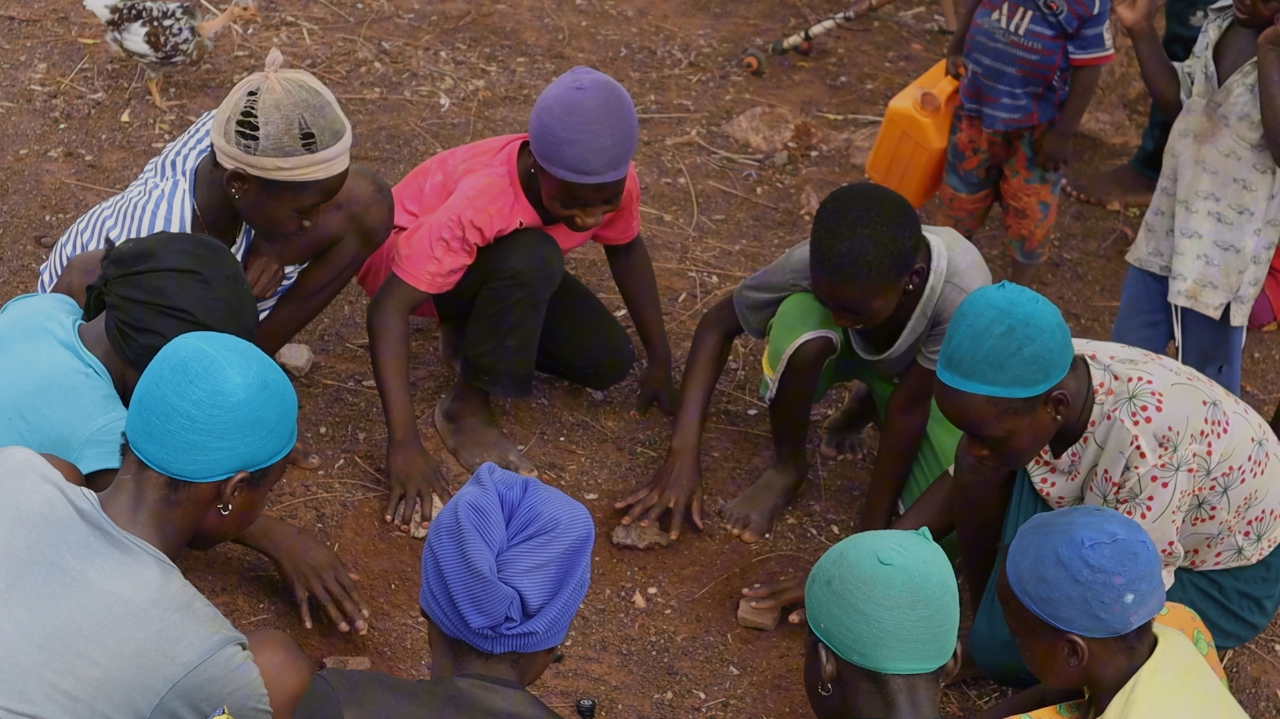
Here, raising a child is not understood solely as the responsibility of the woman who gives birth to her or the household in which she sleeps. Children grow within a wider community where adults watch over them, guide them and, when necessary, step in to provide support.
“She is not mine alone.”
The words capture something fundamental about the relationship between children and community in Bihinayili.
A Wider Circle of Care
Amina is one of the women who helps care for Tunteiya.
But the responsibility does not stop with her.
Within the community, children may move between homes, share meals with other families and receive guidance from adults who are not their biological parents.
A child eating from another woman’s cooking pot is not necessarily considered a visitor.
When guidance is needed, another adult does not always look away because the child “belongs” to someone else.
Responsibility is shared.
This way of life has existed within many African communities for generations, even if it has rarely been described using words such as philanthropy.
Yet philanthropy is exactly what many of these actions represent.
It is the giving of food, but also of time.
It is the sharing of resources, but also of responsibility.
It is an elder offering wisdom, a neighbour paying attention and a family making room for another child.
No formal structure may record these contributions, but together they create an informal safety net around children such as Tunteiya.
“She is not mine alone.”
Philanthropy Beyond Money
When we talk about philanthropy, the conversation often centres on large donations, foundations and development organisations.
But in communities such as Tunteiya’s, giving can look very different.
It is embedded in relationships
.
Gafar, a member of the community, describes a culture in which responsibility for children extends beyond individual families. Adults are expected to guide young people around them, while elders continue to play an important role in passing on values, advice and a sense of collective responsibility.
These traditions remind us that communities are not simply waiting for solutions to arrive from outside.
They already possess systems of solidarity of their own.
That distinction matters.
Stories about rural African communities can sometimes focus almost entirely on what people lack — income, infrastructure, services or opportunities.
Those challenges are real.
But focusing only on deficits can obscure another important reality: communities also possess knowledge, relationships and social systems that help people navigate difficult circumstances every day.
Tunteiya’s story offers a window into one of those systems.
It Takes More Than One Household
There is a familiar African idea that a child belongs not only to a family, but to a community.
In Tunteiya’s community, that idea is visible in everyday life.
It can be seen when women share what they have.
It can be heard when an adult corrects a child with the confidence that the child’s wellbeing concerns everyone.
It is present when elders gather children and young people to advise them about life.
None of these actions may appear extraordinary to the people practising them.
That is precisely what makes them significant.
Care has become ordinary.
Generosity has become cultural.
Responsibility has become collective.
For Tunteiya, growing up within this environment means being surrounded by more than one pair of watching eyes and more than one source of guidance.
Her wellbeing becomes part of a wider social responsibility.
For Amina, caring for Tunteiya is not simply an isolated act of kindness. It belongs to a larger understanding of community — one in which people recognise that the future of a child ultimately affects everyone.
Telling a Different Story About Giving
Tunteiya’s story challenges us to broaden the way we understand philanthropy.
Not every act of giving comes with a cheque.
Not every intervention has a project name.
And not every person creating change carries the title of donor, development worker or philanthropist.
Sometimes philanthropy is a woman making space at her table.
Sometimes it is a neighbour deciding that another person’s child is also worthy of their attention.
Sometimes it is an elder choosing to pass knowledge to another generation.
These acts may be small individually, but together they sustain communities.
For Tunteiya, they mean something even more personal: she is growing up knowing that the responsibility for her wellbeing does not rest on one person alone.
Her story reminds us that some of Africa’s strongest systems of support have existed quietly within communities for generations.
They are built not only on what people can give, but on a simple understanding of what they owe one another.
Tunteiya may belong to one family.
But in the community that surrounds her, she is not theirs alone.
Glowgh Multimedia documents people, places and stories that deserve to be seen and remembered.
Category: Documentary Stories / Human Interest